

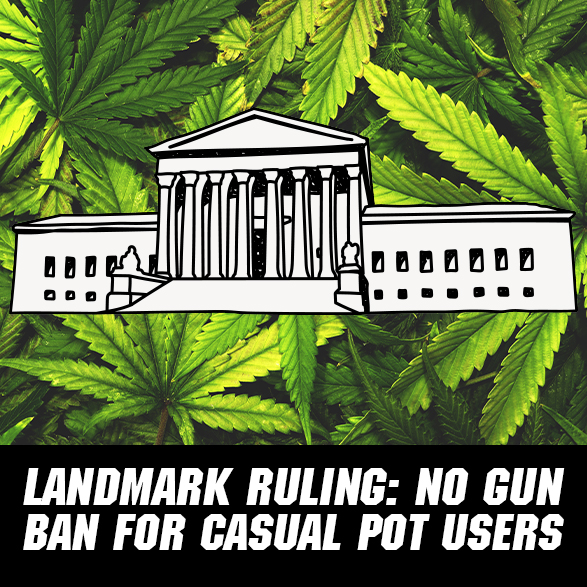
Hey folks, if you’ve been following the back-and-forth between federal gun laws and everyday Americans who enjoy their rights (and maybe a joint now and then), today’s news hits different. The Supreme Court just dropped a unanimous 9-0 ruling that’s got gun owners breathing a little easier — especially those who use marijuana in states where it’s legal or decriminalized.
This isn’t some sweeping overhaul that throws the doors wide open, but it’s a solid step in the right direction. Let’s break it down without the legalese overload.
The Case That Started It All
The ruling centers on Ali Danial Hemani, a Texas guy who admitted to occasional marijuana use. FBI agents found a handgun in his home during a search back in 2022, along with some weed and cocaine. Prosecutors hit him with charges under a federal law from the Gun Control Act of 1968 that bars “unlawful users” of controlled substances from owning firearms.
Sound familiar? It’s the same statute that snagged Hunter Biden. The difference here? Hemani fought back, arguing it violated his Second Amendment rights. Lower courts agreed, and now the Supreme Court has backed him up. Justice Neil Gorsuch wrote the opinion, calling it a “narrow” decision.
The justices basically said the government can’t just assume every casual pot smoker is a danger to society and strip away their gun rights without better evidence. Gorsuch pointed out that comparing marijuana users to “habitual drunkards” from old historical laws doesn’t hold up, especially when millions of Americans use cannabis regularly in a changing legal landscape.

What This Means for Gun Owners
Look, drugs and guns can be a bad mix — nobody’s arguing that. But this ruling pushes back against blanket bans that treat casual users the same as addicts or violent criminals. In the future, prosecutors will need to show actual evidence that someone’s drug use makes them a specific danger to the public, not just check a box on a form.
This comes at a time when marijuana is legal or medically available in a ton of states, even as it stays federally controlled (though that’s loosening too). For the Tactical Shit community — folks who take responsible self-defense and constitutional rights seriously — this is huge. It reinforces the Bruen framework from a few years back, forcing the government to tie restrictions to historical traditions rather than modern policy preferences.

Gun rights groups like the Second Amendment Foundation are calling it a win against overreach, while some on the other side are downplaying it as narrow. Either way, it limits how aggressively the feds can go after people for simple possession alongside legal-ish weed use.
Why This Matters on the Range and Beyond
We’ve seen too many cases where good people get caught up in technicalities while the real threats walk free. If you’re a law-abiding citizen who trains regularly, carries responsibly, and follows your state’s laws on cannabis, this decision adds some breathing room. It doesn’t give anyone a free pass for reckless behavior — we’re all about safety and accountability here at Tactical Shit — but it stops the government from making broad assumptions that erode the 2nd Amendment.
Key Takeaways:
- Unanimous decision — Rare these days, and it sends a strong signal.
- Narrow but impactful — Doesn’t kill the whole law, but raises the bar for prosecutions involving casual users.
- Hunter Biden parallel — The same statute, different outcomes based on the facts.
- Ongoing 2A momentum — Builds on recent cases expanding the right to keep and bear arms.
Final Thoughts
At the end of the day, the Supreme Court reminded everyone that the Constitution doesn’t bend to whatever the current administration or bureaucrats think is convenient. Rights aren’t privileges to be doled out based on lifestyle choices that aren’t actively harming others.
If you’re in the firearms community, this is one to celebrate cautiously. Stay informed, keep training, and always prioritize responsible ownership. The fight for our rights never really ends — whether it’s against bad policy in D.C. or overzealous enforcement.