


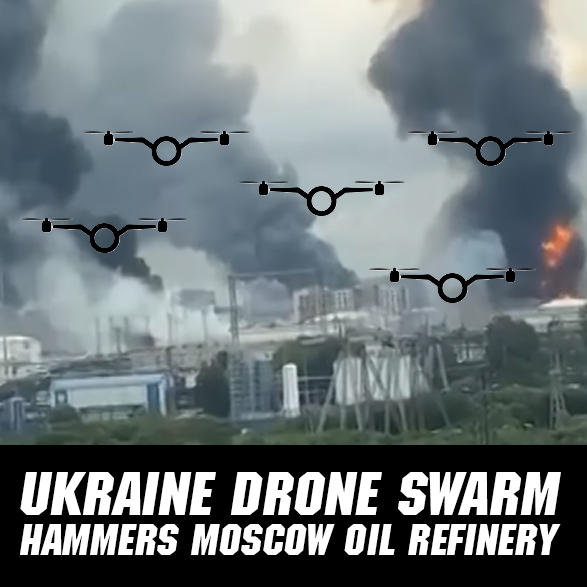
The war in Ukraine just got a lot closer to the heart of Russia. Early on June 18, 2026, Ukrainian drones launched what Russian officials are calling one of the largest attacks yet on Moscow, slamming into the capital’s primary oil refinery in the Kapotnya district and lighting up the skyline with thick black smoke.
This wasn’t a one-off. It marks the second strike on the same facility in just days, following damage on June 16 that reportedly halted operations at a major processing unit. For anyone following the grinding attrition of this conflict, it’s a stark reminder that Ukraine is no longer just defending — they’re taking the long-range fight deep into Russian territory.
What Happened in the Latest Assault
According to Moscow Mayor Sergei Sobyanin, Russian air defenses intercepted nearly 200 drones over the capital region, but several got through. Dramatic video shows explosions ripping through the refinery, with a fuel storage lid dramatically blown skyward amid roaring flames. Black smoke billowed for hours, visible across southeastern Moscow, while residents reported thuds, debris, and even complaints of “black rain.”
The Moscow Oil Refinery (Gazprom Neft’s Kapotnya facility) is no small target — it supplies a huge chunk of fuel for the Moscow region, including road fuel and aviation gasoline. Temporary airport closures and road shutdowns followed, underscoring how these strikes ripple into everyday Russian life. Ukrainian President Zelenskyy framed it as a direct response to ongoing Russian attacks on Ukrainian cities and infrastructure.
Broader overnight operations reportedly hit targets in the Rostov region and occupied Ukrainian territories, part of a pattern of escalating Ukrainian deep strikes.
Why This Matters: The Bigger Picture on Energy and Attrition
Ukraine has ramped up its drone campaign against Russian oil infrastructure significantly in 2026. Refinery strikes have doubled since the start of the year, forcing partial or full shutdowns and cutting into Russia’s refining capacity by estimates around 15-17% or more in some periods — that’s hundreds of thousands of barrels per day offline.
These aren’t random hits. Refineries feed both the domestic economy and military logistics. Disrupting them squeezes fuel supplies, raises costs, and forces Russia to divert resources to repairs and defense. The Moscow facility’s repeated targeting shows Kyiv’s ability to penetrate layered air defenses around the capital, a symbolic and practical blow.
From a tactical standpoint, this highlights the evolution of drone warfare. Low-cost, long-range systems are proving they can reach high-value targets far behind lines, bypassing traditional ground defenses. It’s asymmetric pressure: Ukraine doesn’t need parity in conventional forces when precision strikes can create outsized headaches for Russian sustainment. Similar patterns have played out at other sites, from Tatarstan to export terminals, chipping away at revenue streams that fund the war machine.
Broader Implications for the Conflict
Russia claims massive intercepts (hundreds of drones downed in some reports), but the fact that strikes keep landing — especially in and around Moscow — suggests gaps in coverage or overwhelming swarm tactics. No major casualties were immediately reported at the refinery itself, but debris caused injuries elsewhere.
For observers in the tactical and 2A community, there’s a lesson in resilience and innovation under pressure. Ukraine’s adaptation of commercial and indigenous tech into effective strike platforms mirrors how small teams or irregular forces can challenge larger powers. On the flip side, it reinforces the importance of layered defense, redundancy in critical infrastructure, and rapid repair capabilities — things Russia is being tested on daily.
View this post on Instagram