


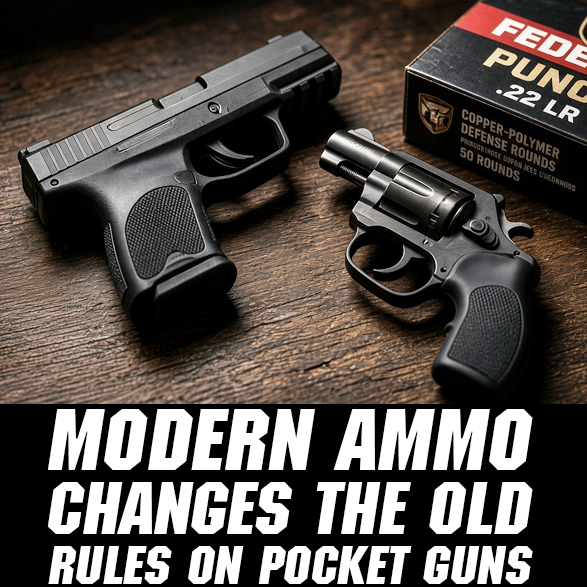
Jeff Cooper once said carry a .25 if it makes you feel good, but don’t load it. If you shoot somebody with it, he might get mad. That line stuck around for decades because, for a long time, it matched what people saw on the range and in gel tests. American Rifleman recently took a fresh look at whether those old criticisms still hold up for small calibers like .22 LR.
A lot has changed. Ammo companies started treating rimfire more seriously for defensive use, and the guns themselves got better. The old blanket dismissal of anything smaller than 9mm doesn’t hold up the same way it used to.
Reliability is the first thing people bring up with .22 LR. Rimfire has a reputation for light strikes and duds, and that reputation isn’t completely wrong—especially with cheap bulk packs made for plinking. Those loads were never built for consistent ignition under stress. Switch to something purpose-built or higher-grade like Federal Punch or CCI Velocitor and the picture improves. Even decent range ammo has gotten more consistent. One shooter ran more than a thousand rounds of Aguila .22 LR through various guns without a single failure to fire. That doesn’t make rimfire as consistent as centerfire, but it does mean the “it’ll always fail when you need it” claim is overstated if you’re not running the cheapest stuff on the shelf.
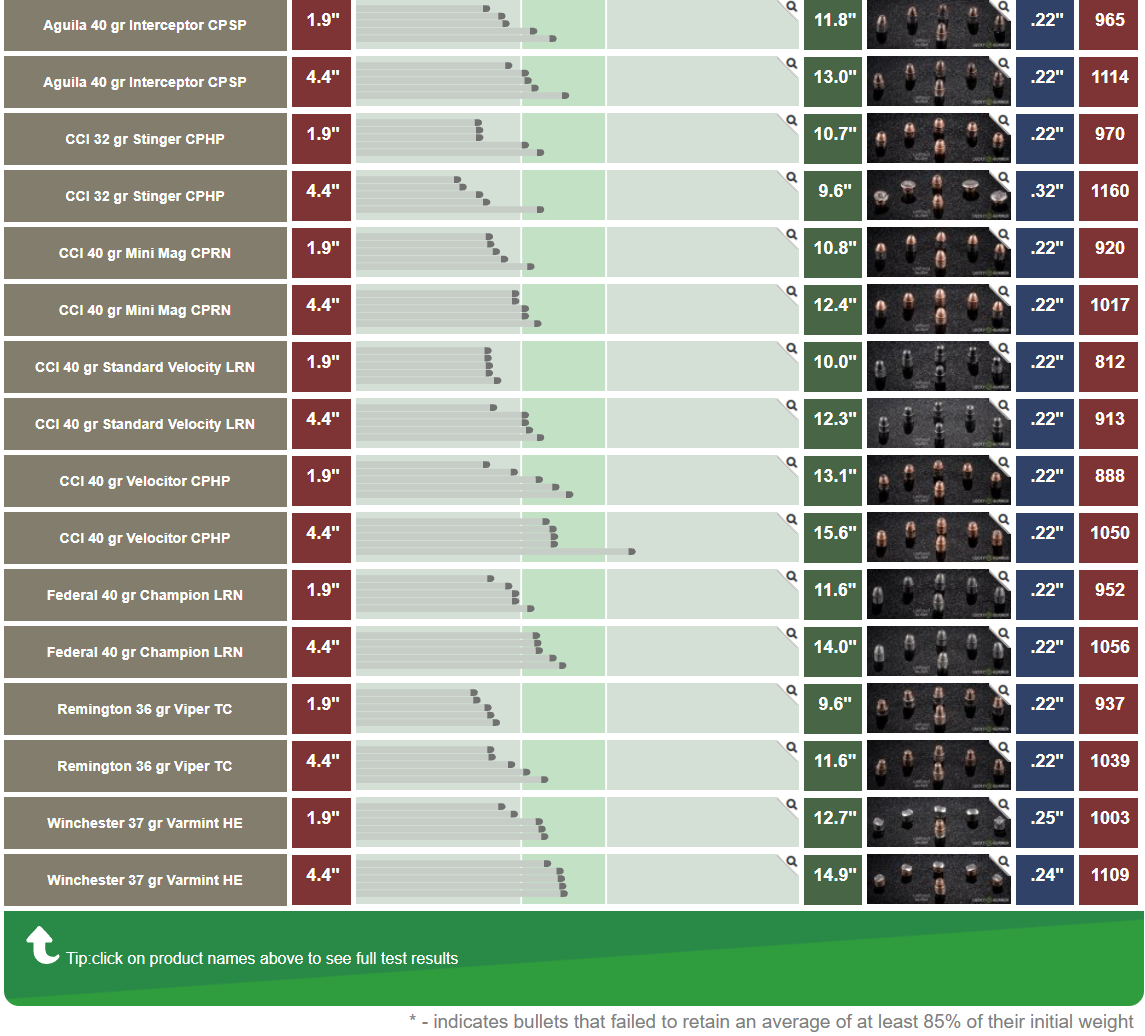
Performance is where the gap is clearer. Lucky Gunner’s gel work showed that eight out of fifteen .22 LR loads they tested didn’t reach the FBI’s 12-inch penetration minimum. Compare that to just two failures out of fifty-two defensive 9mm loads. Federal Punch is one of the few .22 loads actually designed around short barrels and penetration rather than expansion that rarely happens at those velocities. Even then, you’re working with a smaller permanent wound channel. Barrel length matters a lot here. A .22 rifle has a much better chance of delivering useful penetration than a two-inch pocket pistol. Several trainers and former lawmen have noted that .22 rifle hits in real encounters were effective more often than the internet arguments would suggest. Context decides more than the caliber stamp on the barrel.
Where small calibers actually pull ahead is shootability. Low recoil, easy slide manipulation on some guns, and less muzzle blast make them usable for people who struggle with larger handguns. Instructors have run demos where a student who couldn’t control a Glock 19 or a snub .38 put consistent hits on a 3×5 card at five yards with a .22 LCR. One instructor put it simply: he needs sights he can see, a trigger he can manage, and reliability. Everything else is secondary. Several well-known trainers—including people who teach defensive handgun skills for a living—have carried .22s at times. Revolvers help with the remaining rimfire quirks because you don’t have to cycle the action or clear a stoppage the same way.
None of this makes a .22 the ideal choice for most people. If you can run a 9mm or .38 effectively and carry it, that’s still the smarter everyday pick for most defensive scenarios. The point is there is no hard minimum caliber that works for everyone. The gun you can actually hit with under stress beats the more powerful one that stays in the safe or that you flinch with. Do the research on specific loads, test what your particular gun likes, and match the platform to the job—short-barrel pocket gun versus a rifle for the house. Progress in ammunition and better understanding of what actually stops threats has made the old absolute rules less absolute.