

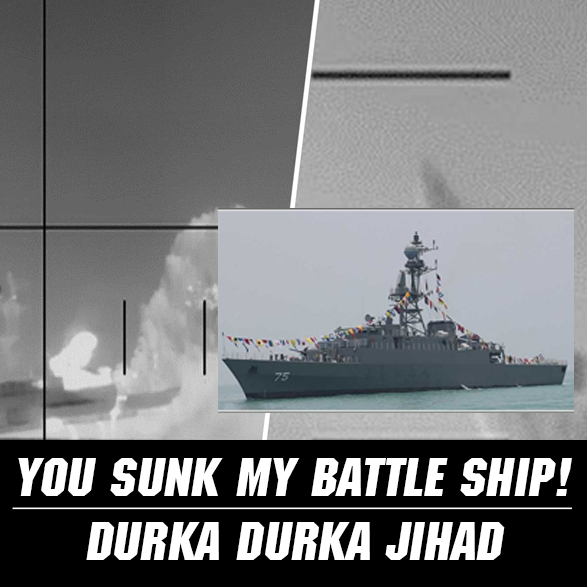
The U.S. military has delivered a series of devastating blows to Iran’s naval forces and missile arsenal in the opening days of Operation Epic Fury, the ongoing joint U.S.-Israeli campaign against Tehran. According to the latest updates from U.S. Central Command (CENTCOM) and senior officials, American forces have sunk or destroyed more than 20 Iranian navy vessels—including a high-profile submarine strike—and severely crippled Iran’s ability to threaten shipping in the Persian Gulf and beyond.
A Historic Naval Takedown
In one of the most striking developments, a U.S. fast-attack submarine fired a single MK 48 torpedo to sink an Iranian warship in the Indian Ocean—reportedly the frigate IRIS Dena—marking the first time since World War II that an American submarine has sunk an enemy vessel with a torpedo. Defense Secretary Pete Hegseth confirmed the action during a Wednesday briefing, while Adm. Brad Cooper, CENTCOM commander, noted in a video update that Iran’s “most operational” submarine also sustained major damage (a hull breach). As of early March 2026, no Iranian naval ships were reported underway in the Persian Gulf, Strait of Hormuz, or Gulf of Oman—essentially bottling up what remains of Tehran’s fleet in port.
Cooper emphasized the broader goal bluntly: the U.S. intends to sink Iran’s entire navy to eliminate its capacity to harass international shipping. “We’re focused on shooting all the things that can shoot at us,” he said, adding that operations are “ahead of our game plan.”
Massive Strikes on Missiles and Defenses
Beyond the sea, U.S. and Israeli forces have hammered Iranian land-based threats. CENTCOM reports nearly 2,000 targets struck with over 2,000 munitions in the campaign’s first 100+ hours. This includes hundreds of ballistic missiles, mobile launchers, drones, and air-defense systems destroyed or degraded. Cooper specifically highlighted ongoing “dynamic targeting” hunts for Iran’s remaining mobile ballistic missile launchers to wipe out any lingering launch capability.
The impact shows in the numbers: Iranian ballistic missile fire reportedly dropped sharply (some assessments cite an 86% reduction), and drone attacks fell by around 73%. Despite Iran’s retaliation—launching more than 500 ballistic missiles and 2,000 drones since the fighting intensified—the U.S.-led effort has clearly shifted momentum.
The Bigger Picture: Strait of Hormuz and Global Energy
The Strait of Hormuz, through which roughly 20% of the world’s daily oil consumption flows (about 20 million barrels), has seen traffic grind to a near halt. Only a handful of tankers passed through recently, as Iran issued threats to target any vessels attempting transit. Oil prices jumped 12% to around $81 per barrel in response, with natural gas prices surging in Europe and Asia.
President Donald Trump addressed the economic fallout directly on Truth Social, directing the U.S. International Development Finance Corp. to offer affordable political risk insurance and guarantees for maritime trade—especially energy shipments—through the Gulf. He added that the Navy stands ready to escort tankers if needed to keep the lanes open.
Two U.S. carrier strike groups (including the USS Gerald R. Ford in the eastern Mediterranean and elements around the USS Abraham Lincoln in the Arabian Sea) have played key roles in containing Iranian vessels, supported by destroyers, littoral combat ships, and other assets scattered across the region.
Why This Matters Now
This escalation follows months of tension over Iran’s nuclear program and regional proxy activities, exploding into open conflict with coordinated U.S.-Israeli strikes. The focus on neutralizing Iran’s navy and ballistic missile inventory aims to prevent threats to global commerce and allied forces. While casualties have occurred on both sides (including confirmed U.S. service member losses), officials stress the campaign’s precision and overwhelming advantage.
As Adm. Cooper put it, the enemy is “off balance,” and the U.S. plans to keep it that way until core objectives—destroying missile capabilities, ending naval harassment, and blocking nuclear ambitions—are met.
The situation remains fluid, with potential for further escalation or diplomatic off-ramps. For now, though, the message from Washington is clear: Iran’s ability to project power at sea and through missiles has taken a historic hit.