


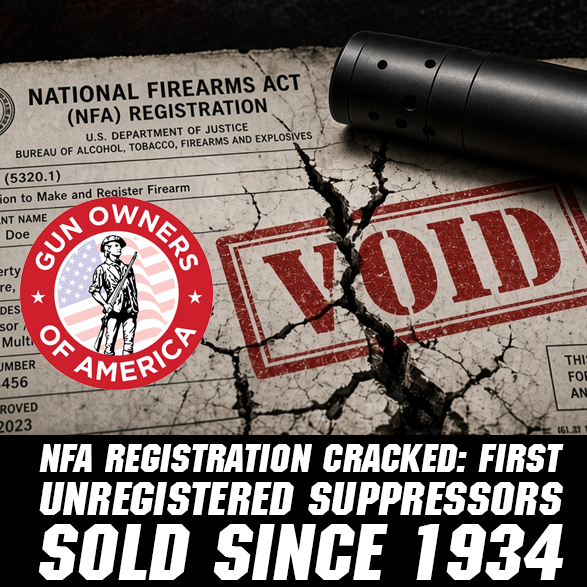
Ninety-two years of paperwork, fingerprints, photos, and waiting just took a serious hit.
On August 5, U.S. District Judge James Wesley Hendrix in the Northern District of Texas ruled that the National Firearms Act’s registration and approval requirements for suppressors, short-barreled rifles, short-barreled shotguns, and certain AOWs no longer hold up. The reason is straightforward. Congress zeroed out the making and transfer taxes on those items in the One Big Beautiful Bill Act. With the tax at zero, the registration scheme that existed to collect it lost its constitutional footing under the taxing power. The court rejected the government’s attempt to save the rules under the Commerce Clause.
The judge stayed his own order for seven days so the Justice Department could run to the Fifth Circuit. They never did. The stay expired. At one minute past midnight on August 13, two GOA members—Brandon Herrera and Texas State Rep. Wes Virdell—walked out of Silencer Shop in Leander, Texas with suppressors. No Form 4. No tax stamp. No entry in the National Firearms Registration and Transfer Record. Rep. Andrew Clyde and GOA’s Erich Pratt were in the room. Those were the first lawful unregistered suppressor transfers since the NFA became law on June 26, 1934.
GOA, Silencer Shop Foundation, Palmetto State Armory, SilencerCo, B&T USA, and a coalition of fifteen states were among the plaintiffs. The permanent injunction covers the named parties, their current and future members, and the customers of the commercial plaintiffs. That is why the transfers happened cleanly. The buyers were GOA members. The seller was a lead plaintiff. The products came from covered manufacturers.
Congress is already pushing the next step. Rep. Clyde is leading a bipartisan (well, mostly Republican) coalition calling on Attorney General Todd Blanche and the ATF to apply the ruling nationwide through formal rulemaking instead of leaving a patchwork system where coverage depends on which organization you joined or which dealer you bought from.
That patchwork is the real friction right now. The injunction is not universal. ATF has not issued clear written guidance despite GOA’s requests. Erich Pratt’s latest update from GOA is blunt: as of mid-August they still cannot tell individual members exactly how the order applies to every situation, and neither can the ATF. State laws that independently regulate suppressors or short-barreled firearms remain in force. The Gun Control Act background check requirements still apply. Machine guns and destructive devices were never part of the tax reduction and stay fully under the old NFA rules.
This is the largest practical rollback of NFA restrictions in the law’s history, but it is not the complete dismantling some headlines claimed. The registry itself was not ordered destroyed. Form 1 and Form 4 processes still exist for anyone outside the protected class. Dealers and buyers who are not members of the plaintiff organizations or customers of the plaintiff companies remain in a gray zone until the DOJ either expands the relief or a higher court settles it.
View this post on Instagram
For the Tactical Shit crowd this is still a big deal. Suppressors just became dramatically more accessible for a growing circle of people. Hearing protection that actually works on the range without the old bureaucratic delay is closer for many. Short-barreled rifles and shotguns follow the same path for those covered. The legal theory that carried the day—tax power cannot support pure regulation once the tax disappears—opens the door for further challenges.
The practical advice from the people who actually made the first transfers remains the same: talk to a lawyer who understands your specific state and your relationship to the plaintiffs before you move. Celebrate the win. Document everything. Keep the pressure on for nationwide clarity. The last two weeks moved faster than the previous two decades. The next phase will decide how permanent this becomes.