

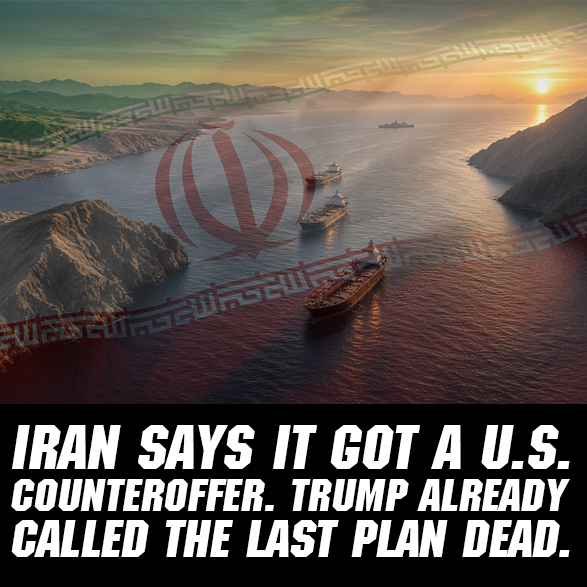

Tehran’s line on Wednesday was simple enough: the United States sent something back.
Not a press conference. Not a signed deal. A response. Iranian officials say Foreign Minister Abbas Araghchi put it in front of President Masoud Pezeshkian at a Cabinet meeting after New York, Doha, and a week of shuttle talk through Qatar. Government spokeswoman Fatemeh Mohajerani confirmed the paper landed. She did not read it out loud.
That matters because President Trump already told reporters the last Iranian plan “would not be acceptable.” He said Iran only wanted a deal because it was “losing so badly.” Tehran says it never got a formal no through the channel it actually uses. Those two facts can sit in the same week. They usually do.

What Iran put on the table
The proposal Iran floated last week is a seven-day clock, not a peace treaty.
Washington lifts its blockade of Iranian ports. It eases the squeeze on Iranian oil sales. It releases frozen Iranian funds — figures in the reporting sit around $12 billion. Hostilities pause, including on related fronts. Iran, in return, reopens the Strait of Hormuz and talks start again on the nuclear file. Araghchi has described the first steps as a four-to-five-day job, the strait opening near the end of the week, and negotiations on day seven.
People briefed on the mediator track say the two sides are not as far apart on what has to happen as they are on who goes first. That is the whole fight in one sentence. Iran wants the economic pressure off before it gives up the chokepoint. Washington does not want to unlock ports, cash, and oil sales on a promise.
Pezeshkian’s public line after the Cabinet session was the usual one from a government under a blockade: any deal has to be “win-win,” and Iran will “stand up for the rights of the Iranian people.” Translate that how you want. It is not surrender language.

Hormuz is still the lever
Before this war, about a fifth of the world’s seaborne oil and a large share of LNG moved through that narrow water between Iran and Oman. That is why every tanker story still moves markets. UK maritime authorities said ships were hit by projectiles in the strait again on Tuesday. Iran accuses vessels of crossing without permission. The U.S. has been running a blockade on Iranian ports. Both sides treat the waterway as a pressure tool, not a shipping lane with a timetable.

Workarounds exist. They are slower and more expensive. Kpler’s numbers this week put combined oil and fuel flows near 21.8 million barrels a day, against a prewar figure around 23.3 million — close on paper, ugly in cost. Night routes, pipelines, the Red Sea, Fujairah. None of that replaces a calm Hormuz. It just keeps the lights on while people argue about sequencing.
Trump has claimed the U.S. already has “total control” of the strait and that tankers are moving. Iran still talks as if permission runs through Tehran. Those stories cannot both be fully true. The insurance market is the referee, and it is still charging war rates.
Iraq emptied out on the same calendar
While the diplomats passed paper, the last American troops left Iraq. That pullout was written in 2024, under a different president, and finished this week under this one. Iran-backed factions treated it like a parade. One commander called it a “crushing defeat for the American project.” Baghdad analysts were dryer: proxies will test how much space a missing U.S. footprint leaves them.
Of the U.S. service members listed as killed since the current campaign began in February, several died in Iraq. Washington still blames Iran-aligned groups there for strikes on neighbors, including damage to Saudi infrastructure. The troops are gone anyway. The calendar said September 30. The calendar won.
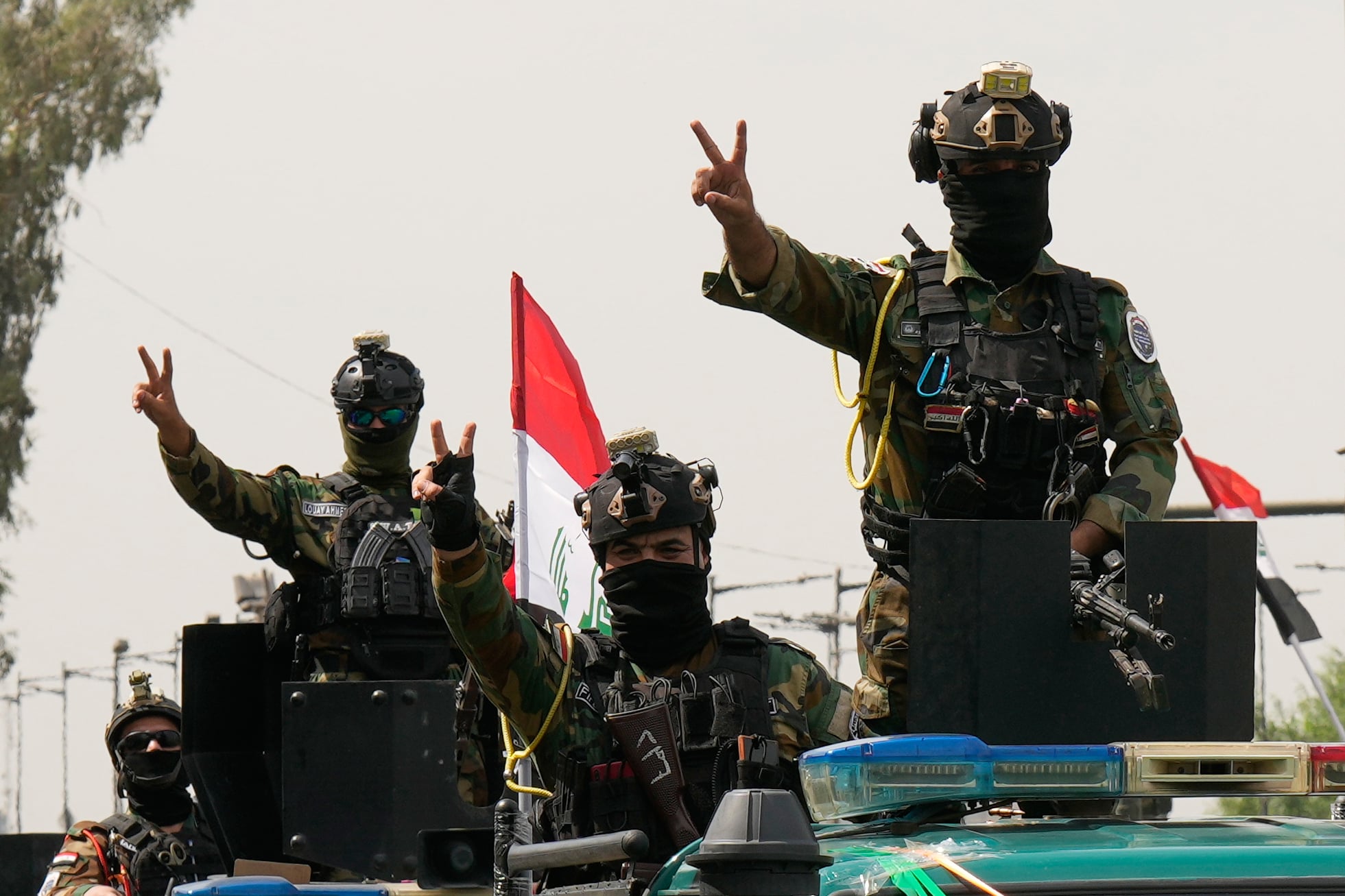
Kataeb Hezbollah and others have already said they are not bound by whoever’s disarmament timetable. That is not a secret. It is the point.