


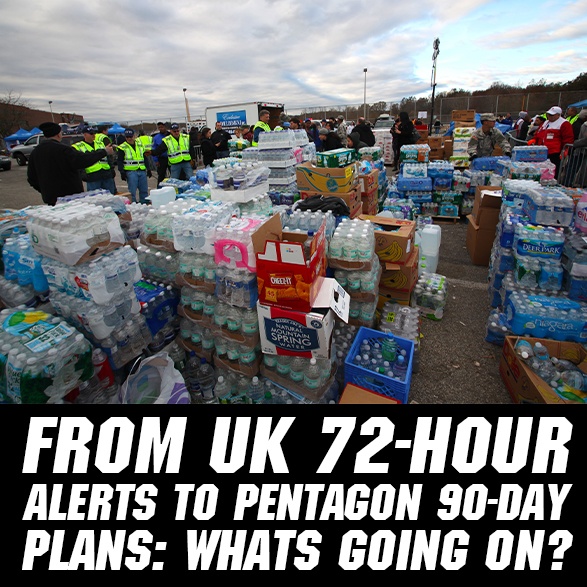

Former FBI Deputy Director Dan Bongino took to his podcast in late October and told listeners the quiet part out loud: have 30 days of food and water on hand. He wasn’t talking about the end of the world tomorrow. He was talking about the kind of disruption that leaves people staring at empty shelves and dead outlets while their kids ask where the water is.
On the show he pointed to warnings coming out of the United Kingdom and other places about preparedness, food, and power. The National Desk and Mediaite both captured the core of it. Bongino said panic kills. The way to keep your head when everything else is falling apart is to already have the radio, the batteries, the emergency food, the rain collection setup, and the filtration tablets sitting there before you need them.
Pentagon FORTRESS Plan: Bases Ready for 90 Days Off-Grid
He also dropped the number that stuck with people. The Pentagon is working on making every major U.S. military base able to keep running for 90 days with no civilian power, no global supply chains, and no outside fuel or water. Fox News broke down the FORTRESS initiative. Portable nuclear reactors, microgrids that can cut themselves off from the regular grid, strategic reserves of munitions, fuel, and critical parts. Pentagon spokesman Sean Parnell put it bluntly: power is combat now. Without electricity you lose communications, water, logistics, and basic command. Relying on the civilian grid for national defense is an intolerable risk.

Bongino’s take was simple. If the military is building Fortress America at the base level, households should be building Fortress My House or Fortress My Apartment. Neighbors are going to be busy taking care of their own kids. They’re not going to have a spare case of water or a bag of rice sitting around for you.
UK Be Ready Campaign and the 72-Hour Baseline
Around the same time, the UK rolled out its “Be Ready” campaign. Officials told households to keep at least 72 hours of supplies ready in case of state-sponsored terrorism, cyberattacks, or other disruptions. Russia gets named in the coverage. The advice is shorter than Bongino’s 30-day buffer, but the direction is the same. Don’t assume the lights, the water, and the grocery delivery will just keep working.

FEMA’s Halloween Post Is Over—The Point Remains
FEMA used the holiday for a light reminder: “This Halloween, keep the scares limited to costumes & movies. Preparing ahead can guarantee a frightfully fun night! Create an emergency plan, choose a place to meet if you get separated, & download the FEMA app to receive alerts.” KOMO News noted the timing next to Bongino’s comments. The graphic said “Don’t be scared, be prepared.” The costumes are packed away now. The meeting place, the alerts, and the actual supplies are still the part that matters.
Red Cross 30 Days of Preparedness: Kits and Daily Steps
The American Red Cross ran its 30 Days of Preparedness push during National Preparedness Month. Their Southern California page lays out the practical breakdown: a go-kit with three days of supplies you can carry, a stay-at-home kit with two weeks of food and water, plus a month’s worth of medications. Communication plans, knowing your local risks, flashlights in multiple rooms, gas tanks that aren’t running on fumes. Red Cross frames it as small daily steps instead of one giant panic buy.

What Actually Makes Sense for Your House
Experts have been careful to note there’s no public indication of a specific imminent threat that demands everyone suddenly clear the shelves for a full month. That’s fair. Bongino himself has said he’s not a doomer and that the best day of your life is the one where you never needed the kit. The worst day is the one where your kids are looking at you and there’s nothing in the house.
The gap between official 72-hour or “several days” guidance and a 30-day household buffer is real. So is the gap between what the Pentagon is doing for bases and what most people have sitting in a closet. You can start with the Red Cross numbers and stretch them. One gallon of water per person per day is the baseline. Non-perishable food your family will actually eat. A battery or hand-crank radio. Extra batteries. A way to purify water. Copies of important documents. Cash in small bills. Medications. If you have pets, they need their own plan too.
None of this requires buying everything in one weekend. Add a little extra on regular grocery runs. Check expiration dates. Rotate the stock. Practice turning off the water main or cooking a meal without the stove. Download the FEMA app and the Red Cross emergency app. Pick an out-of-area contact. Write the numbers down on paper.
Halloween is over. The grid, the supply chains, and the neighbors who won’t have extra still work the same way. Bongino’s point was the practical one: get the stuff so you’re not explaining to your kids why the water is gone. The Pentagon is doing its job on the bases. The rest of us still have to handle Fortress My House.