

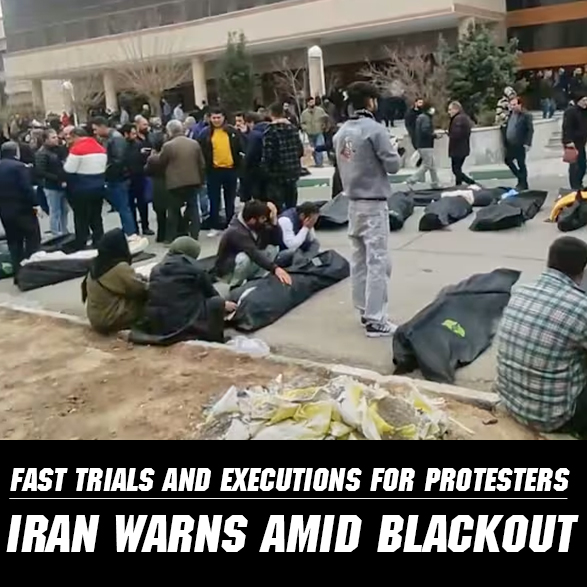
Iran is experiencing one of the most severe waves of unrest in decades, with nationwide anti-government protests triggered by economic collapse entering their third week. The regime’s brutal response has led to a staggering human cost, drawing sharp international attention — including direct warnings from U.S. President Donald Trump.
What Sparked the Protests?
The demonstrations erupted on December 28, 2025, initially driven by the dramatic collapse of the Iranian rial currency, soaring inflation, and chronic economic hardship worsened by international sanctions and state mismanagement. What began as economic grievances quickly escalated into widespread calls to challenge the clerical establishment and the Islamic Republic’s rule.
Protests have spread to cities and towns across all 31 provinces, with Tehran remaining a major flashpoint. Eyewitness accounts describe streets turning into “war zones,” with security forces — including the Revolutionary Guard’s Basij militia — using live ammunition against largely unarmed demonstrators.
Here are some powerful visuals from the early days of the protests in Tehran:
- (Protesters gather in Tehran amid heavy security presence — January 9, 2026)
- (A placard reading “Long live the Shah” amid anti-government demonstrations — January 9, 2026)
The Human Cost: A Record-Breaking Death Toll
According to the U.S.-based Human Rights Activists News Agency (HRANA) — one of the most cited sources tracking the unrest — the confirmed death toll from the security forces’ crackdown now stands at at least 2,586 (as of January 14, 2026). This includes:
- 2,417 protesters
- 147 government-affiliated personnel (security forces killed during clashes)
- 12 children
- 10 civilians not participating in protests
This figure exceeds the casualties of any major protest wave in Iran in recent decades, including the 2019 fuel protests (~1,500 killed) and even surpassing the scale of the 2022 Woman, Life, Freedom movement. Other reports suggest the true number could be significantly higher — some activist groups and sources inside Iran fear estimates ranging from 12,000 to 20,000 due to the ongoing near-total internet blackout and restricted information flow.
More than 18,400 people have been detained, with reports of mass arrests and raids continuing.
Government Response: Internet Blackouts, Firearms, and Threats of Rapid Executions
Iranian authorities imposed a severe communications blackout starting January 8, cutting off most internet access and international calls to limit information from leaking out. Outbound calls were partially restored on January 14, allowing limited eyewitness accounts to emerge.
Security forces have reportedly used indiscriminate live fire, turning demonstrations violent. The head of Iran’s judiciary, Gholamhossein Mohseni-Ejei, stated on state television that trials and executions for detained protesters would proceed quickly for maximum deterrent effect:
“If we want to do a job, we should do it now… If it becomes late, two months, three months later, it doesn’t have the same effect.”
This comes despite a stark warning from U.S. President Donald Trump, who has repeatedly signaled potential strong U.S. intervention, stating:
“We will take very strong action… If they do such a thing, it’s not going to work out good for them.”
Some U.S. personnel have been advised to evacuate a key military base in Qatar amid heightened regional tensions.
Broader Context and Regional Implications
These events follow a turbulent period for Iran, including a 12-day war with Israel in June 2025 that targeted nuclear sites. The protests echo the chaos of the 1979 Islamic Revolution but on a modern scale amplified by economic despair and digital suppression tools.
The regime has held large pro-government rallies (including a mass funeral for ~100 slain security personnel) while blaming “terrorists,” Israel, and the U.S. for orchestrating the unrest.
What Happens Next?
As the blackout continues, verifying the full scope remains challenging. The regime appears determined to crush the movement through speed and severity, while international pressure — especially from the U.S. — raises the risk of escalation.