Uthmeier Says Florida Won’t Defend Convictions Under Broad Trigger Ban (yes, that means “Enhanced Reset ” too)
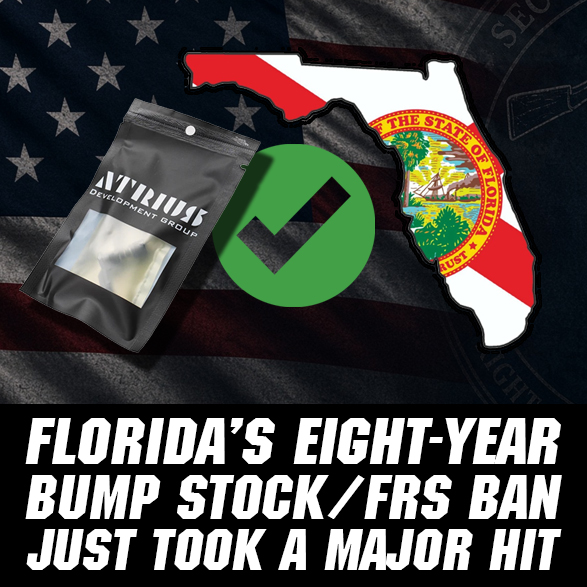
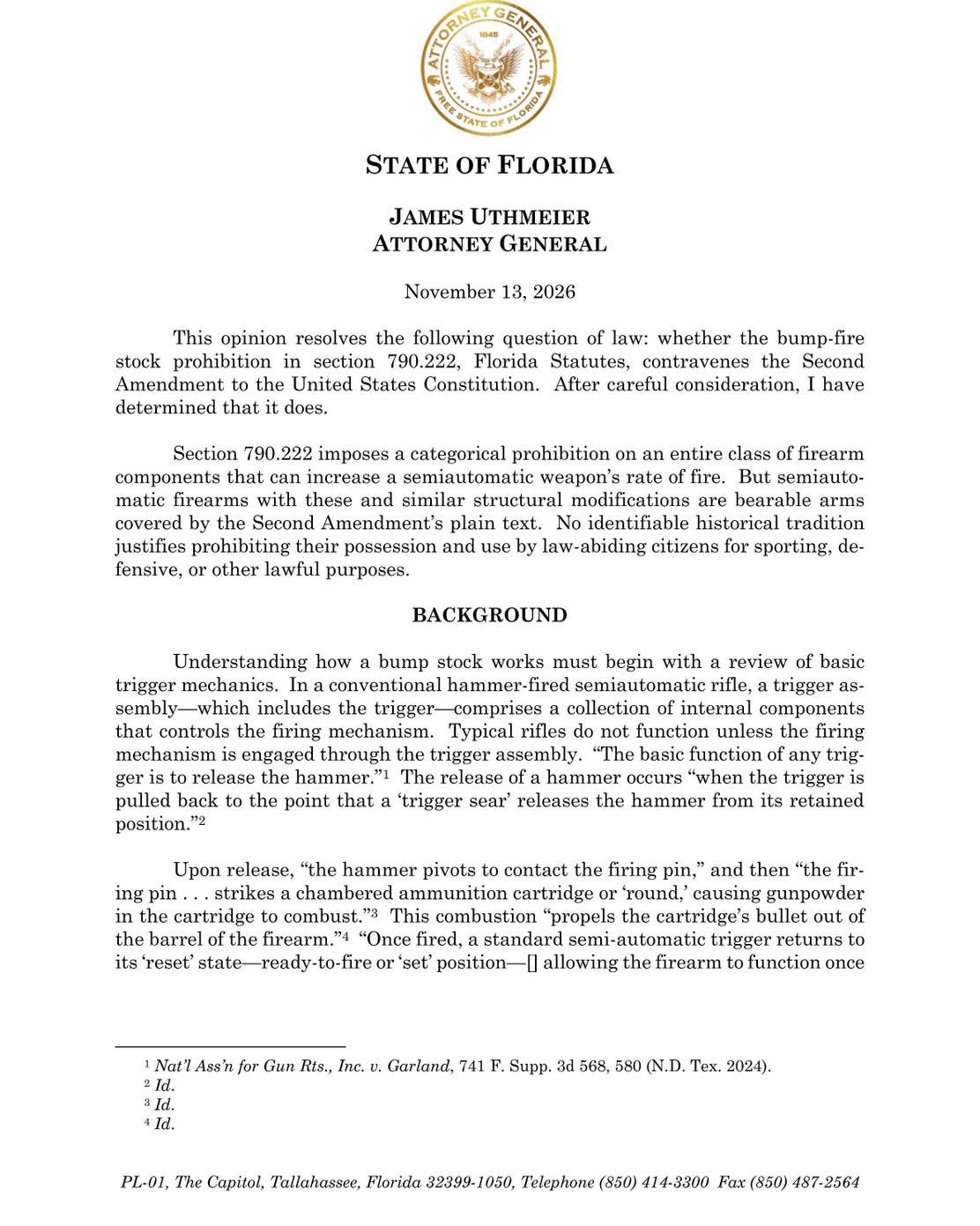
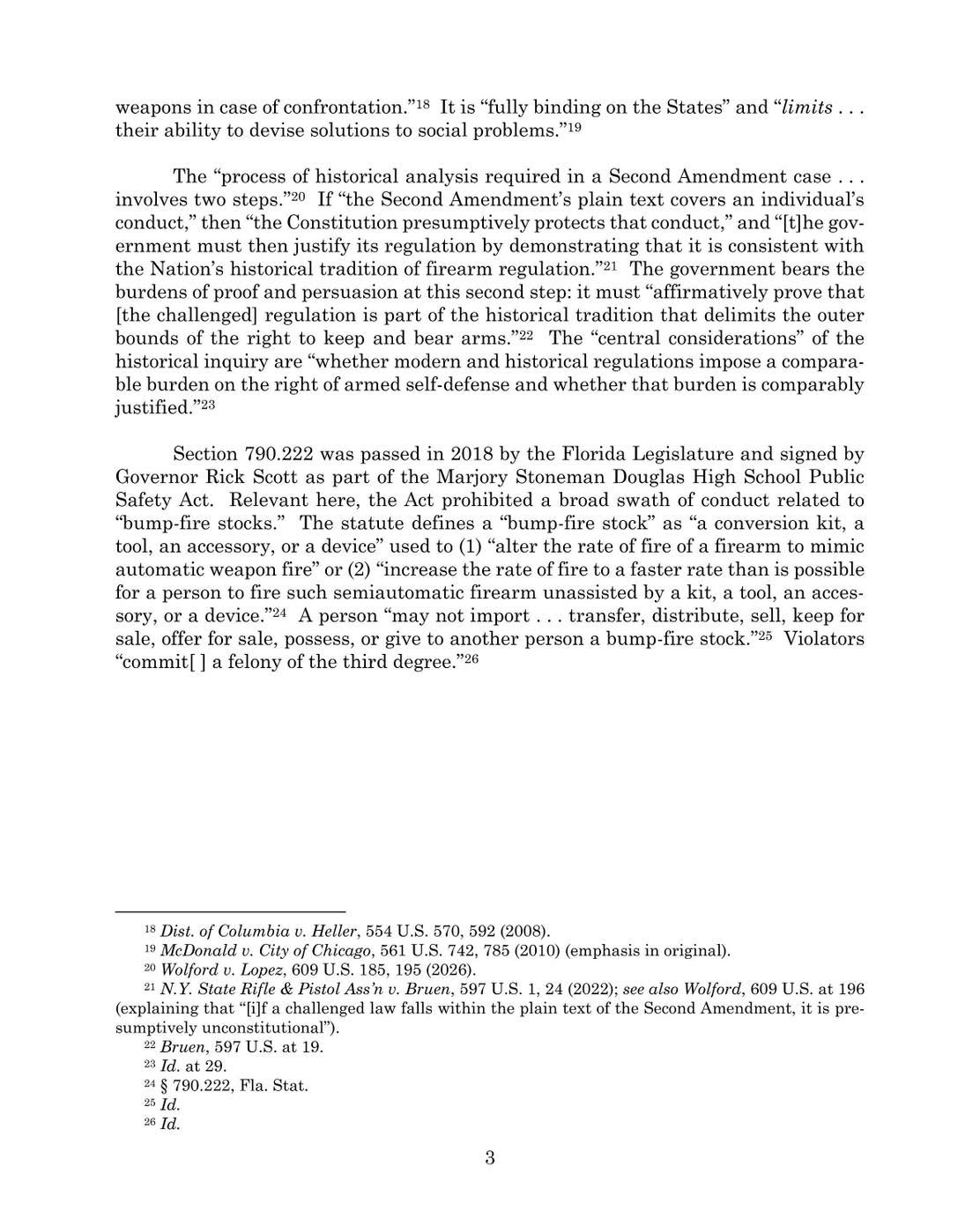
Florida Attorney General James Uthmeier dropped a formal opinion on November 13, 2026, that Section 790.222 of the Florida Statutes violates the Second Amendment. The law, passed as part of the Marjory Stoneman Douglas High School Public Safety Act and signed by then-Governor Rick Scott, makes it a third-degree felony—up to five years in prison—to import, sell, transfer, or possess a “bump-fire stock.”
The definition is the real problem. It covers any conversion kit, tool, accessory, or device used to alter a firearm’s rate of fire so it mimics automatic fire, or that increases the rate beyond what someone could achieve without assistance. That language has been read to reach far past traditional bump stocks into forced-reset triggers, binary triggers, and other common upgrades people use for competition and recreational shooting.

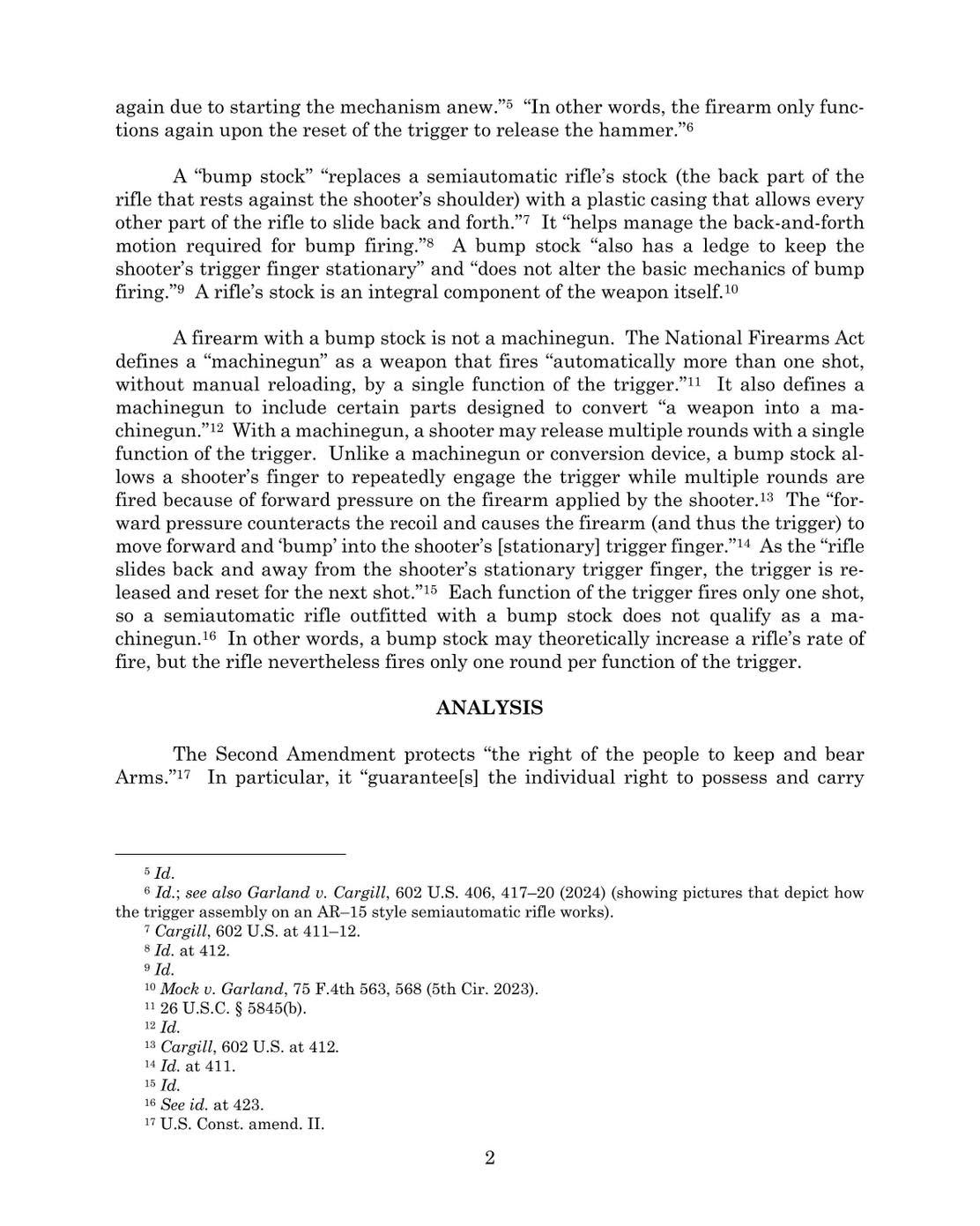
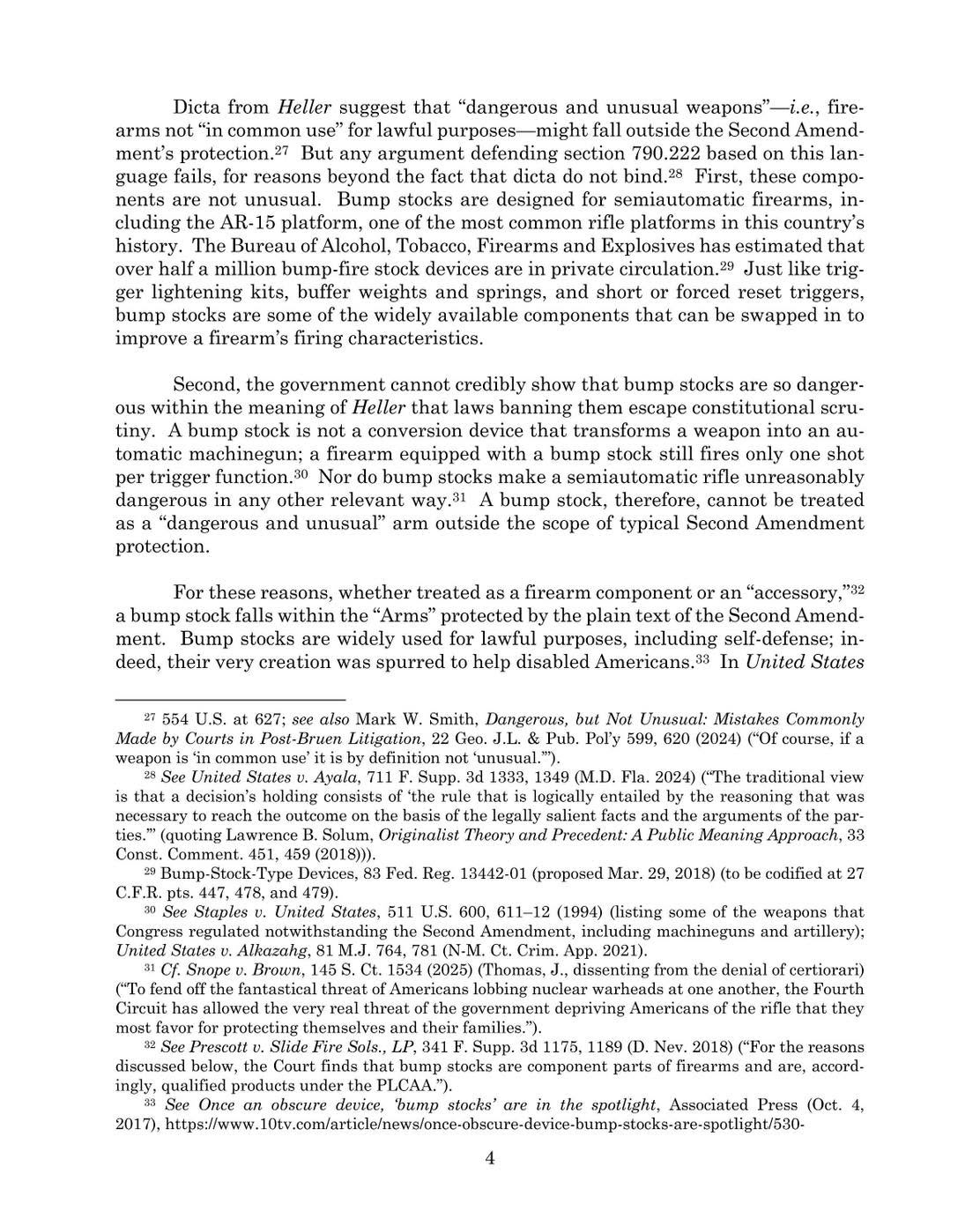
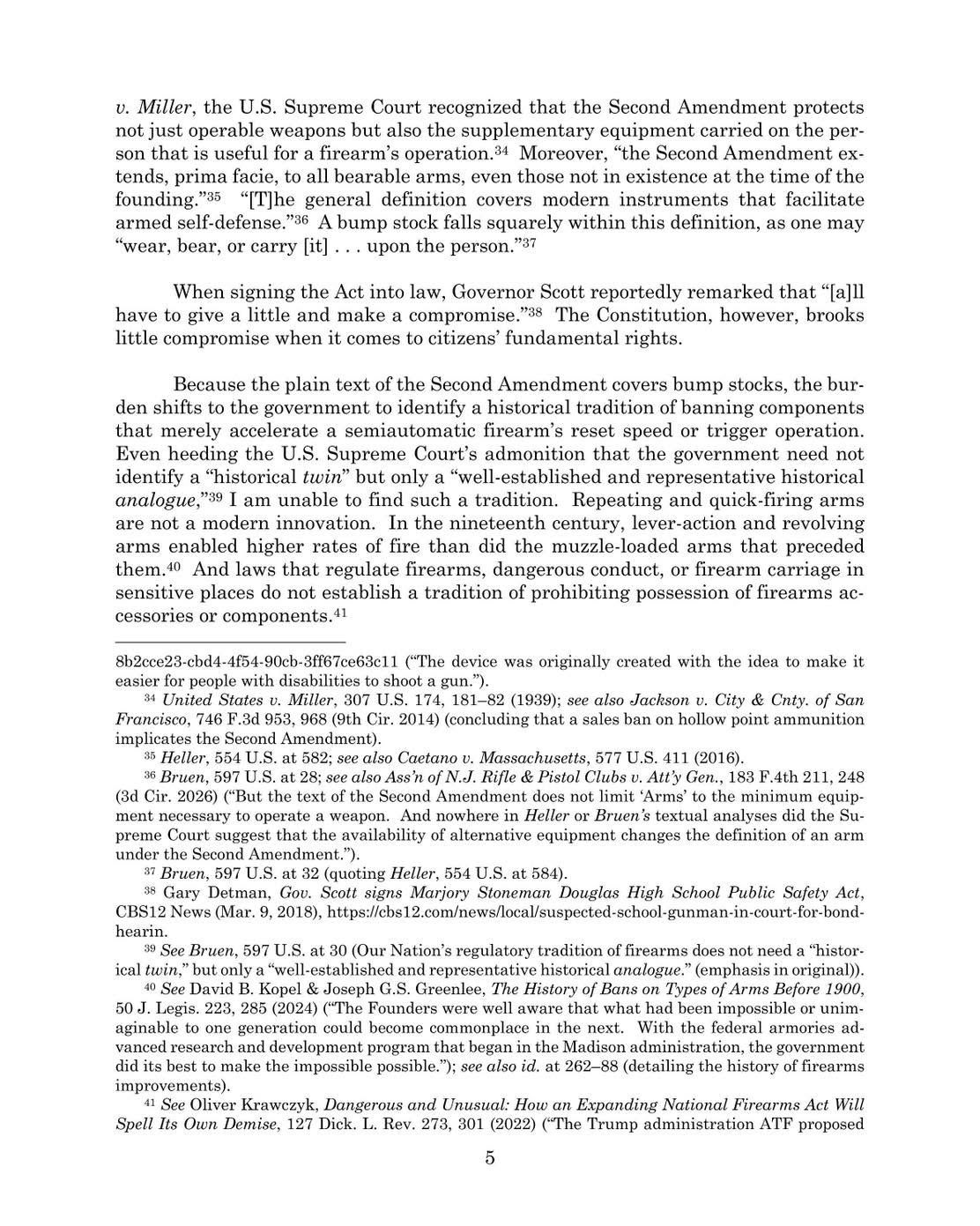
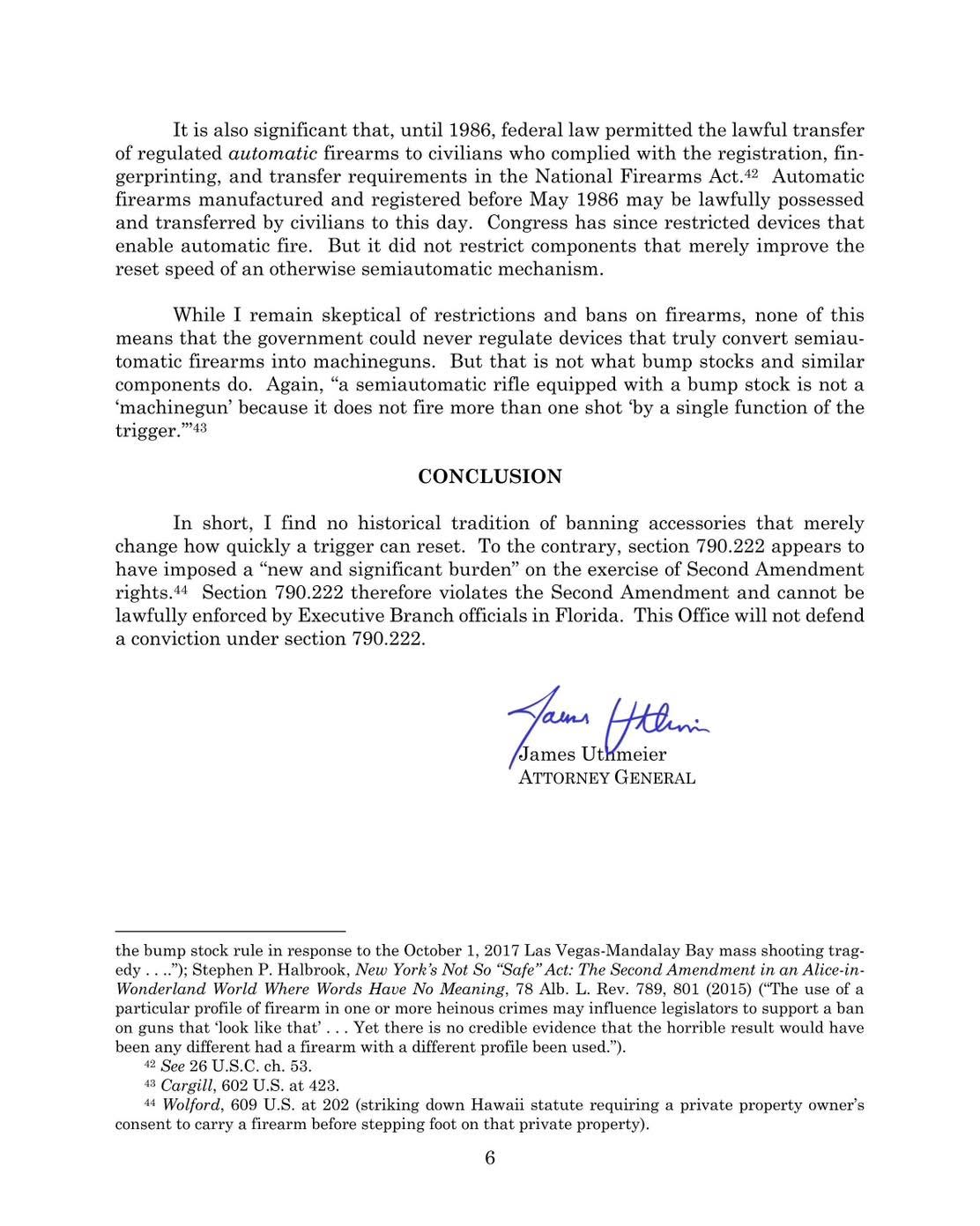
Uthmeier’s opinion is direct. Semiautomatic firearms fitted with these components remain bearable arms protected by the plain text of the Second Amendment. There is no historical tradition that justifies banning accessories simply because they let a trigger reset faster. A bump stock does not turn a rifle into a machine gun; the firearm still fires one shot per function of the trigger. The U.S. Supreme Court already said as much in Garland v. Cargill when it struck down the federal ATF rule. Florida’s statute therefore places a new and significant burden on the right and cannot be lawfully enforced by executive-branch officials in the state. The Attorney General’s office will not defend any conviction under the statute going forward.
The opinion is advisory. The statute is still on the books until the Legislature repeals it. Local prosecutors retain discretion, and anyone currently facing charges should talk to a lawyer rather than assume the case disappears overnight. Still, this is the second major Second Amendment guidance from Uthmeier’s office in a week. On November 6 he told law enforcement that law-abiding Floridians may possess short-barreled rifles and shotguns without NFA registration or tax stamps, and that his office will not defend those convictions either.

Key Takeaways
- Florida AG James Uthmeier issued a formal opinion on Nov. 13, 2026, declaring Fla. Stat. § 790.222 unconstitutional under the Second Amendment.
- The 2018 law (part of the Marjory Stoneman Douglas High School Public Safety Act signed by then-Gov. Rick Scott) bans “bump-fire stocks” as a third-degree felony punishable by up to five years in prison.
- The statute’s definition is extremely broad—it covers any kit, tool, accessory, or device that alters a firearm’s rate of fire to mimic automatic fire or increases the rate beyond what is possible unassisted. This language has been applied to forced-reset triggers, binary triggers, and similar upgrades.
- Uthmeier’s reasoning: these components are used on semiautomatic firearms that are bearable arms protected by the Second Amendment’s plain text; there is no historical tradition of banning accessories that merely speed trigger reset; a bump stock does not convert a firearm into a machine gun (one shot per trigger function); and the U.S. Supreme Court already reached this conclusion in Garland v. Cargill.
- Conclusion in the opinion: the law imposes a new and significant burden on the right, cannot be lawfully enforced by Florida executive-branch officials, and the Attorney General’s office will not defend any convictions under it going forward.
Coverage has been quick. AmmoLand and Florida’s Voice both reported the opinion the same day, and the full document is available on the My Florida Legal site. Gun owners in the state have spent years watching the broad wording create risk around ordinary trigger work. This opinion does not rewrite the statute, but it removes the Attorney General’s support for prosecutions under it.

For anyone building or upgrading a rifle in Florida, the practical takeaway is the same as with the earlier SBR guidance: the state executive branch has signaled it will not stand behind these particular restrictions. Federal rules still apply where they exist, and other state statutes remain in force. Check the latest guidance, keep records of what you own, and treat any advice here as general information, not a substitute for talking to counsel who knows the current enforcement climate in your circuit.