

The chaotic skies over Kuwait this week just got even more complicated — and terrifyingly real.
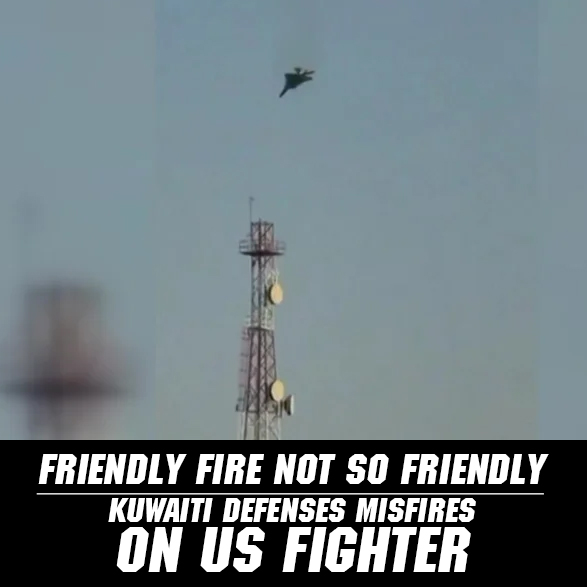
Imagine this: You’re watching footage of a sleek F-15E Strike Eagle tumbling through the air, tail section ablaze, smoke trailing like a dark comet, before two ejection seats rocket out and parachutes bloom against the desert backdrop. That’s exactly what videos circulating online captured early Monday, March 2, 2026, as three U.S. Air Force F-15E Strike Eagles went down over Kuwaiti territory.
But here’s the twist that has everyone talking — it wasn’t enemy fire from Iran that took them out. It was friendly fire from Kuwait’s own air defense systems.
According to an official statement from U.S. Central Command (CENTCOM), the incident happened late Sunday night (around 11:03 p.m. ET) amid intense active combat. Iranian aircraft, ballistic missiles, and drones were pounding the region in retaliation for ongoing U.S.-Israeli strikes under “Operation Epic Fury.” In the heat of that chaos, Kuwaiti defenses — which are actively supporting the coalition effort — mistakenly identified and engaged the incoming American jets.
All six crew members (two per aircraft, since the F-15E is a two-seat variant) ejected safely, were quickly recovered, and are reported in stable condition. No serious injuries on their end, which is honestly the one piece of good news in this mess. Kuwait has acknowledged the mistake outright, and CENTCOM’s response was surprisingly gracious: “Kuwait has acknowledged this incident, and we are grateful for the efforts of the Kuwaiti defense forces and their support in this ongoing operation.”

The cause is under investigation, but the fog of war is thick right now. With Iranian barrages lighting up the night — including strikes that hit near the U.S. Embassy compound in Kuwait City, debris raining on the Ahmadi oil refinery (injuring two workers), and reports of broader attacks across U.S. bases in the Gulf — it’s not hard to see how a tragic misidentification could happen.
This isn’t happening in a vacuum. The crashes come on Day 3 of escalating hostilities that began with U.S. and Israeli airstrikes targeting Iranian leadership and nuclear-related sites. Reports confirm the death of Iran’s Supreme Leader Ayatollah Ali Khamenei and dozens of top officials in those initial blows. Iran responded with waves of missiles and drones, rejecting any immediate talks with Washington. As one Iranian official put it bluntly: “We will not negotiate with the United States.”
Meanwhile, the human cost on the U.S. side is mounting too — a fourth American service member died from injuries sustained in earlier Iranian attacks, bringing fatalities to at least four in Kuwait alone.

Videos from the scene (shared across outlets like Sky News, CNN, and social media) show the dramatic moments: one jet spiraling downward in flames, pilots parachuting to safety, and locals rushing to the crash sites amid plumes of black smoke. It’s raw, intense footage that underscores just how close this conflict is to spiraling further out of control.
For now, the coalition is holding the line, but incidents like this highlight the razor-thin margins in modern air warfare — especially when allies are layered in dense, high-threat environments. Investigations will dig into IFF (Identification Friend or Foe) failures, communication breakdowns, or rules-of-engagement gaps, but in the moment, lives hung in the balance and thankfully everyone walked (or floated) away.
What a reminder that even in high-tech battles, the oldest dangers — confusion and misjudgment — can still bring down multimillion-dollar machines and put real people at risk.