

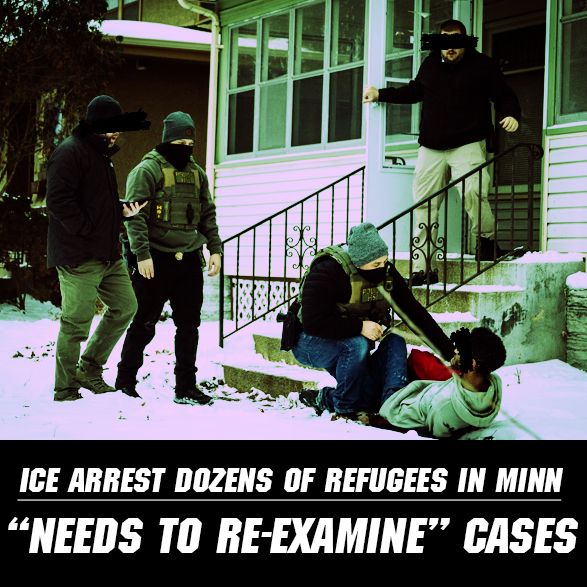
The arrests follow a January 9, 2026, announcement from U.S. Citizenship and Immigration Services (USCIS) that the administration would re-examine thousands of refugee cases through new background checks. The initial focus: Minnesota’s approximately 5,600 refugees who have not yet obtained lawful permanent resident (green card) status.
Advocates report that at least dozens — and possibly over 100 — have been detained in recent days. Many were taken from their homes, including:
- A Somali mother leaving behind a toddler
- An Eritrean mother of three in St. Paul, who had filed for permanent residency and was working while caring for her children
- Families where mothers and adult children were arrested together
These refugees had arrived through the official U.S. Refugee Admissions Program, undergoing extensive vetting abroad by the Department of State and DHS before resettlement.
Under longstanding rules, refugees must apply for a green card within one year of arrival — but delays due to costs, paperwork, and backlogs are common and have historically not resulted in arrests or deportation.
As one legal expert starkly noted:
“This has never happened, that you arrive as a refugee, and that on day 366, if you are still not a green card holder, you are deportable.” — Tracy Roy, legal director at the Immigrant Law Center of Minnesota
Broader Context: Policy Shifts and Community Impact
This wave occurs amid a massive federal deployment of about 2,000 agents to the Minneapolis-St. Paul area — described by DHS as one of the largest immigration operations ever. The state has become a focal point following:
- A November 2025 fraud scandal involving some individuals in the Somali community
- The administration’s suspension of green card processing for refugees
- Moves to end Temporary Protected Status (TPS) for certain Somalis
- A January 7, 2026, fatal shooting of Minneapolis resident Renee Nicole Good (37) by an ICE agent during an encounter, sparking protests, clashes, and calls for independent investigation
Local leaders, including Gov. Tim Walz and Minneapolis Mayor Jacob Frey, have disputed federal accounts of the incident and criticized the surge. Immigrant rights groups describe the operations as “devastating” and “terrifying” for families.
“It’s happening very fast,” said Michele Garnett McKenzie, executive director at The Advocates for Human Rights in Minneapolis. “It’s devastating the community.”
Why This Matters: Human Stories Behind the Headlines
These are not recent arrivals or individuals with criminal records (beyond minor issues like traffic violations in reported cases). Many have built lives in Minnesota — working, raising children, and integrating into one of the largest Somali-American communities in the U.S.
The transfers to distant Texas detention centers add separation and uncertainty for families already reeling from the arrests.
Reactions and Next Steps
- Advocacy groups and lawyers are mobilizing, providing legal aid and documenting cases.
- Local officials and Minnesota’s Attorney General have filed lawsuits to challenge aspects of the operations.
- Federal officials (ICE and DHS) have not directly responded to many questions about the refugee-specific arrests, emphasizing instead enforcement against “criminal illegal aliens” in separate announcements.
The situation highlights the rapid policy changes under the current administration, raising questions about due process for lawfully admitted refugees.
Stay informed as this developing story unfolds — community organizations recommend “know your rights” resources and observer networks to monitor enforcement activities.