

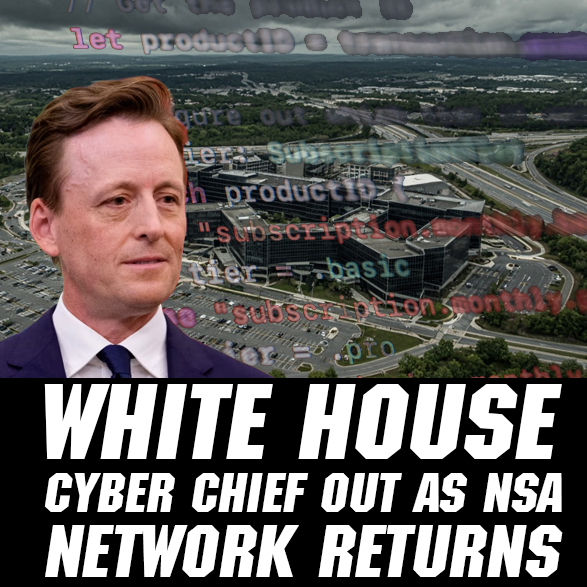
The National Security Agency’s highly classified internal communications network is back online after nearly four days of disruption. Employees at Fort Meade began returning Friday on staggered schedules to avoid overwhelming the system with simultaneous logins. An internal voicemail obtained by CNN stated that NSA Washington was operating under normal conditions with exceptions, and most staff were expected back by midday.
The outage hit NSANet, the agency’s classified network used for internal communications and sharing sensitive information. It functions essentially as the NSA’s classified email system. Multiple officials confirmed it was not the result of a cyberattack. Instead, it stemmed from efforts to patch critical vulnerabilities in PHP, a programming language that powers roughly 70 percent of the world’s websites. The flaws, known as PHP2Shell, were disclosed last month. Artificial intelligence tools helped researchers identify them. The NSA, FBI, and CISA had issued urgent warnings on October 21 urging organizations to install patches.
Director of National Intelligence Jay Clayton linked the disruption to those patching efforts. He noted that some systems failed to restart as expected after the software updates. A senior administration official acknowledged Thursday that the patches took longer than anticipated. On several occasions, employees were told to report at staggered times only to be sent home without ever logging in successfully.
Officials stressed that the agency’s most sensitive intelligence-gathering operations continued throughout the disruption. The NSA maintains multiple backup systems and workarounds. The Georgia campus, a key hub for Middle East intelligence collection, was also affected, but sources indicated operations there were not negatively impacted. The agency’s ability to support President Trump’s recent Asia travel remained intact.
This marked an unusually long and disruptive outage for NSANet, according to current and former officials. It occurred amid a broader wave of technology problems affecting major institutions, including Microsoft services, airlines, and financial systems. The incidents have raised questions about the risks of rapidly updating critical digital infrastructure, even as AI accelerates the discovery of longstanding software vulnerabilities.
In a related development, White House National Cyber Director Sean Cairncross is leaving his post. He is being succeeded on an acting basis by Kirsten A. Davies, the chief information officer at the Department of Defense. The change comes as the nation deals with the string of outages. Reports differ on the circumstances of Cairncross’s departure. Some sources close to the White House indicated the president supported firing him, citing a lack of strong cyber credentials for the role. Other accounts described the exit as more amicable, timed to allow a replacement to be confirmed before Democrats take control of Congress in January. Cairncross, confirmed by the Senate in August 2025, had overseen cybersecurity policy coordination across the federal government.
Davies brings prior Senate confirmation from her Pentagon role and roughly two decades of private-sector experience in cybersecurity and technology leadership at companies including Unilever and Estée Lauder. She has thanked the president and Chief of Staff Stephen Miller for the opportunity. Cabinet officials including Secretary of State Marco Rubio and Defense Secretary Pete Hegseth publicly supported the move.
For those tracking national security and preparedness, the episode underscores a basic reality. Even the most sophisticated government systems rely on common software foundations and can face extended downtime during routine maintenance or patching. Mission-critical capabilities held, but the classified internal network did not.