


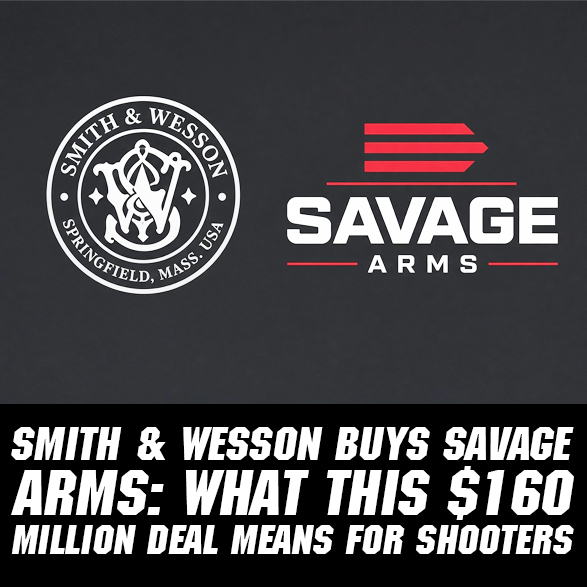

Word hit the streets fast. On October 21, 2026, Smith & Wesson Brands closed on Savage Arms in a deal that values the bolt-gun specialist at roughly $160 million. The announcement came the same day the paperwork finished, which tells you both sides were ready to move.
Smith & Wesson’s official release spells it out. They picked up Savage from an affiliate of Houston-based JDH Capital. The price is a mix of about 9 million SWBI shares (valued at $13.62 each) plus $37.5 million cash. After the usual adjustments for cash, debt, and working capital, the total landed closer to $164.9 million. JDH now owns 16.7 percent of Smith & Wesson and gets a seat on the board through managing director Michael Fertitta.
View this post on Instagram
Savage has been around since 1894. The company is based in Westfield, Massachusetts, and has spent more than 130 years building a reputation on accurate hunting rifles, rimfires, and shotguns. The Model 110 and the AccuTrigger are the names most shooters know. For the twelve months ending September 30, 2026, Savage pulled in about $160 million in net sales and employs roughly 500 people. Smith & Wesson, founded in 1852 and now headquartered in Maryville, Tennessee, has long dominated handguns and has been expanding into long guns. What it lacked was a deep, respected bolt-action hunting line. That gap just closed.
CEO Mark Smith called the move transformative. In the release he said it expands Smith & Wesson’s presence in hunting and helps the company push toward being the undisputed market leader. The combined business is now positioned as the largest commercial firearms manufacturer in the United States. Products stay in production for now. No SKUs have been dropped, and the Westfield plant and sales team are still operating as they were the day before the deal. How long that lasts is the question everyone is watching.
Coverage across the industry landed quickly. American Rifleman noted the 132-year history of Savage and the complementary strengths. Shooting Sports USA highlighted that Smith & Wesson finally has a real bolt gun in the stable. USA Carry walked through the numbers and the board seat for JDH. Gun Talk laid out a clean side-by-side of what each company brings and what was missing.

For shooters the practical side is simple. If you already own a Savage, warranty and parts support should continue under the new ownership. The brand is not disappearing tomorrow. If you have been waiting to buy a Model 110 or one of the rimfire lines, the current inventory is still Savage product built the way it has been. Longer term, the hope is that Smith & Wesson’s scale and distribution muscle push more Savage rifles onto shelves without watering down the accuracy reputation the AccuTrigger helped build. The risk is the usual one that follows any buyout: cost cuts, product rationalization, or a slow drift away from the things that made the smaller company special. Gun owners have seen that movie before with other brands.
Smith & Wesson expects the deal to add roughly $18 million in EBITDAS on a full-year basis, with about $2.5 million in initial synergies. It is projected to be accretive to earnings per share right away. The balance sheet stays solid, with net leverage around 1.16 on a pro forma basis. Those are the corporate numbers. The shop-floor and range-floor numbers will show up over the next few seasons in how the rifles shoot, how available they stay, and whether the price stays honest.
Savage Gear, the fishing brand, is a separate company and is not part of this deal. That clears up one piece of confusion that floated around when the news first broke.
If you are in the market for a hunting rifle, a rimfire trainer, or just keeping an eye on the American makers, this is the story to watch. Two old names under one roof means more shelf space and, with any luck, better availability. It also means one less independent option in a market that has already consolidated more than once. Stock up on what you like while the current lineup is still easy to find, and pay attention to how the next generation of Savage products is labeled and built.
The Instagram post from @kygunco that flagged the news the day it dropped captured the immediate reaction from the community. Some saw opportunity. Others worried about quality. Both reactions are reasonable until the first new production runs hit the counters and the ranges.
What it means for the market and shooters
- Short term: Products and production continue as-is. No announced SKU cuts or plant closures. Current Savage inventory is still the same product people already know. Warranty/parts support should remain available.
- Medium term: Potential upside is better availability and wider distribution of popular Savage models. Downside risk is the usual post-acquisition one: cost cutting, product rationalization, or gradual changes that dilute what made Savage distinctive (accuracy reputation, AccuTrigger, value pricing). Shooters have seen this play out with other brands after buyouts.
- Industry pricing and innovation: Larger scale can help with materials, manufacturing efficiencies, and R&D. It can also reduce competitive pressure that keeps prices honest and forces continuous product improvement. Net effect depends on how aggressively the combined company pursues synergies versus protecting brand equity.
Bottom line for the industry
It is a classic complementary acquisition that strengthens the buyer’s weak spot (bolt-action hunting) while giving the seller a strong public-market exit and ongoing stake. The result is one fewer major independent American rifle maker and one larger player with broader category coverage. For the industry overall, it means continued consolidation, greater scale among the top tier, and more focus on execution (distribution, cost control, brand stewardship) than on pure independent innovation from mid-size specialists.