

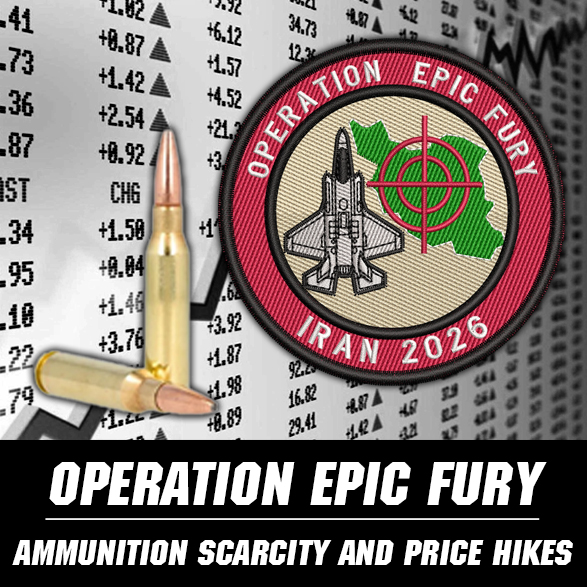
TEHRAN / WASHINGTON — The onset of Operation Epic Fury on February 28, 2026, has sent immediate shockwaves through global defense markets, with experts warning of an “inevitable” surge in ammunition prices and a severe contraction in civilian availability. As the United States and Israel launch massive strikes against Iranian leadership and nuclear facilities, the sudden shift to high-intensity combat operations is already straining a supply chain already weakened by years of global conflict.
Stockpiles Under Strain
Even before the first missiles struck Tehran, the Pentagon’s top generals expressed grave reservations about the U.S. military’s munitions “in the tank”. Sustained support for allies in Ukraine and previous direct exchanges between Iran and Israel in 2025 have left precision-guided munitions and small arms stockpiles at their lowest levels in decades.
Military analysts at CSIS estimate that the current scale of operations can only be sustained for 4–7 days before requiring a massive industrial resupply that the domestic defense base is currently unequipped to handle.
Impact on the Civilian Market
For civilian consumers, the “war footing” means a return to the empty shelves seen during the 2020 pandemic.
- Prioritization of Military Contracts: Major manufacturers like Lake City must prioritize Department of Defense orders, often cutting civilian production lines entirely to meet the sudden surge in government demand.
- Raw Material Shortages: The price of copper, lead, and brass is expected to skyrocket as global logistics in the Middle East—specifically through the Strait of Hormuz—face potential blockades.
- Panic Buying: Similar to the June 2025 conflict, news of escalating warfare has already triggered a wave of bulk buying across the U.S., driving up costs for popular calibers like 5.56mm and 9mm within hours of the announcement.
Economic Outlook
With oil prices surging above $70 per barrel and climbing, the cost of transporting heavy ammunition is adding a secondary layer of inflation. Economists warn that if the conflict transitions from a limited air campaign to a “weeks-long full-fledged war,” the scarcity of ammunition will become a long-term reality for hunters and sport shooters alike.
For now, the global market remains on edge, watching as the most significant military buildup since the Iraq War unfolds in real-time.