

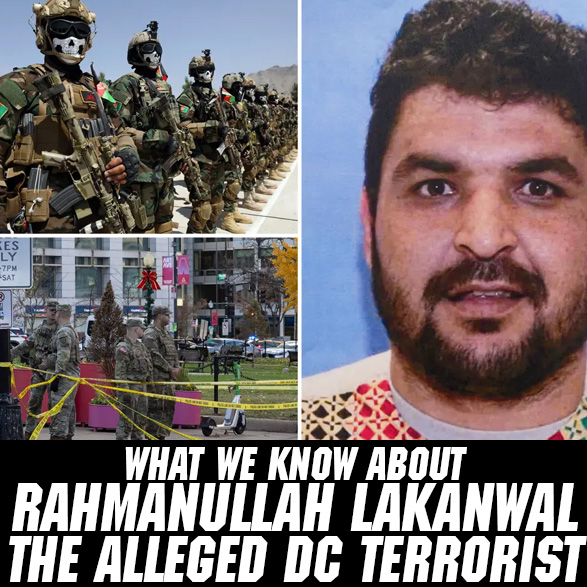
29-year-old Afghan national and former CIA-backed operative stands accused of fatally shooting one National Guard member and critically wounding another near the White House. The incident, which unfolded on November 26, 2025, has ignited fierce debates over immigration vetting, veteran mental health, and national security in the wake of the U.S. withdrawal from Afghanistan. As investigations deepen, questions swirl around the suspect’s unraveling life and the broader struggles of Afghan allies resettled in America.
This DC National Guard shooting – one of the most brazen attacks on U.S. service members in recent memory – has left communities mourning and policymakers scrambling. With President Trump vowing a sweeping review of Afghan admissions, let’s break down the facts, timeline, and implications of this case.
The Shooting: Violence Near the White House
The attack occurred on the eve of Thanksgiving, turning a routine patrol into a nightmare. Two West Virginia National Guard members, Specialist Sarah Beckstrom, 20, and Staff Sgt. Andrew Wolfe, 24, were stationed in Washington, D.C., as part of heightened security operations in the city. While patrolling near the White House – a symbol of American power – they were ambushed by gunfire from Rahmanullah Lakanwal, who had driven cross-country from his home in Bellingham, Washington.
Beckstrom, a recent enlistee from Summersville, West Virginia, who joined the Guard in 2023, was killed at the scene. Described by her father, Gary Beckstrom, as his “baby girl” who had “passed to glory,” she was honored with a vigil in Webster Springs, where West Virginia Gov. Patrick Morrisey called her death the “ultimate sacrifice” for her state and nation. Wolfe, also a volunteer for the D.C. mission, remains in “very critical condition” at a local hospital, fighting for his life.
Lakanwal, wounded in the ensuing exchange with responding officers, was arrested at the scene and hospitalized. He now faces upgraded charges of first-degree murder, with U.S. Attorney for the District of Columbia Jeanine Pirro warning on Fox News that “many more charges to come.” The Metropolitan Police Department has since ramped up security, assigning officers to escort all National Guard patrols in the city – a measure confirmed on November 29 amid fears of copycat threats.
Eyewitnesses described chaos near the Farragut West Metro station, where a makeshift memorial of flowers and an American flag now stands in tribute to Beckstrom’s memory. “These two West Virginia heroes were serving our country and protecting our nation’s capital when they were maliciously attacked,” Gov. Morrisey said, capturing the raw grief echoing across the heartland.
Who Is Rahmanullah Lakanwal? From CIA Hero to Accused Shooter
At the center of this is Rahmanullah Lakanwal, a man whose story embodies the turbulent aftermath of America’s longest war. Born in Afghanistan’s volatile Khost province, Lakanwal was just 5 years old when the U.S. invaded in 2001. By 2011, he had joined an elite CIA-sponsored counterterrorism unit known as the “Zero Unit” – Afghan special forces trained for high-stakes missions like hunting Taliban commanders.
Praised by CIA officers for their “bravery, skill, and loyalty,” these units saved countless American lives, according to Andrew Sullivan, executive director of the nonprofit No One Left Behind. Lakanwal underwent rigorous vetting – including checks against National Counterterrorism Center databases – and served for over a decade before the 2021 U.S. withdrawal. As Kabul fell to the Taliban, the CIA prioritized evacuating nearly 10,000 Zero Unit members like him, who faced death threats from insurgents.
Under Operation Allies Welcome, Lakanwal resettled in the U.S. that year with his wife, five children, and two nephews. Vetted again upon arrival – and described by a senior U.S. official as “clean on all checks” – he applied for asylum, which was granted in April 2025 during the Trump administration. CIA Director John Ratcliffe later confirmed his resettlement stemmed directly from his intelligence work.
Experts point to untreated PTSD from years of combat trauma – losing comrades, sustaining wounds – as a key factor. “Without your help, we are trapped,” wrote former Zero Unit commander Mohammad Shah in a 2023 plea, highlighting suicides in the community driven by “overwhelming sentiment of helplessness.” A relative, voice cracking in an NBC News interview, begged: “I need your help to know why this happened.”
Homeland Security Secretary Kristi Noem suggested radicalization through “connections in his home community,” though no terrorist ties were flagged in his vetting. The FBI continues to probe motives, with former CIA officer Geeta Bakshi noting, “Vetting can help mitigate threats, but it doesn’t eliminate threats… You never know what’s going on in someone’s head.”
Investigation Unfolds: Motive, Charges, and Security Fallout
As of December 1, 2025, the FBI leads a multi-agency probe, interviewing family and combing Lakanwal’s digital footprint for clues. No definitive motive has emerged, but the June 2025 Justice Department audit on Afghan evacuees – which found no systemic vetting failures but flagged risks from rushed processes – looms large.
In response, the Trump administration has halted all Afghan immigration processing and asylum decisions, with USCIS Director Joseph Edlow declaring on X: “The safety of the American people always comes first.” Trump himself posted on Truth Social about pausing migration from “all Third World Countries.”
Moving Forward: Calls for Justice and Support
The road ahead demands answers – not just for the victims’ loved ones, but for thousands of Afghan allies teetering on the edge. Enhanced mental health resources, streamlined visas, and bipartisan reforms could prevent future tragedies. Until then, the memorial flowers at Farragut West serve as a poignant call: Honor the fallen, heal the broken, and safeguard those who served beside us.